Pieve di Soligo, City of Poetry and Landscape
Nestled in the heart of the UNESCO World Heritage Prosecco Hills of Conegliano and Valdobbiadene, Pieve di Soligo is a small town with a strong cultural vocation, where grand architecture alternates with delightful landscape corners. It preserves a refined and vibrant spirit, shaped by prominent twentieth-century figures such as the economist Giuseppe Toniolo and the soprano Toti Dal Monte. Above all, it is here that the words of Andrea Zanzotto, one of the greatest poets of the twentieth century, became landscape.
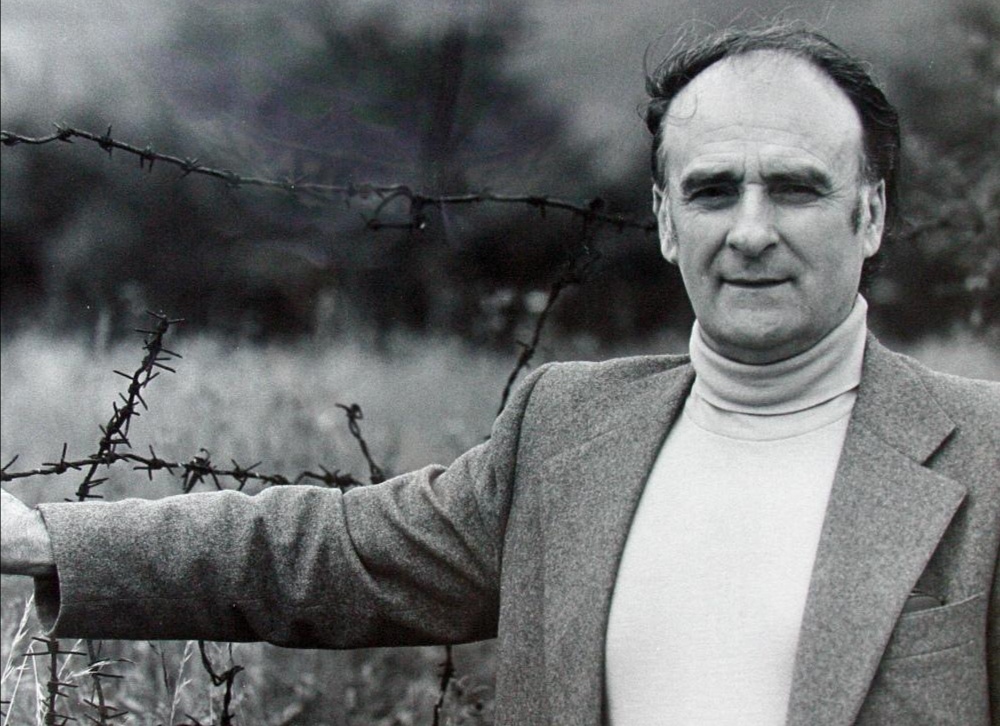
Set off on a journey to discover Pieve di Soligo through its symbolic places and the enduring traces of its unforgettable Poet!
The Poet’s Shadow and Palazzo Vaccari
Our tour begins at the Tourist Office, located in the Fondaco del Gusto, a venue where history and culinary tradition meet, as it houses the Accademia dello Spiedo d’Alta Marca. Directly opposite stands Palazzo Vaccari, a former elementary school and now the Town Hall, bearing the inscription “Educa e spera” (“Educate and hope”), in memory of Mayor Antonio Schiratti’s civic commitment to the education of the less privileged classes.
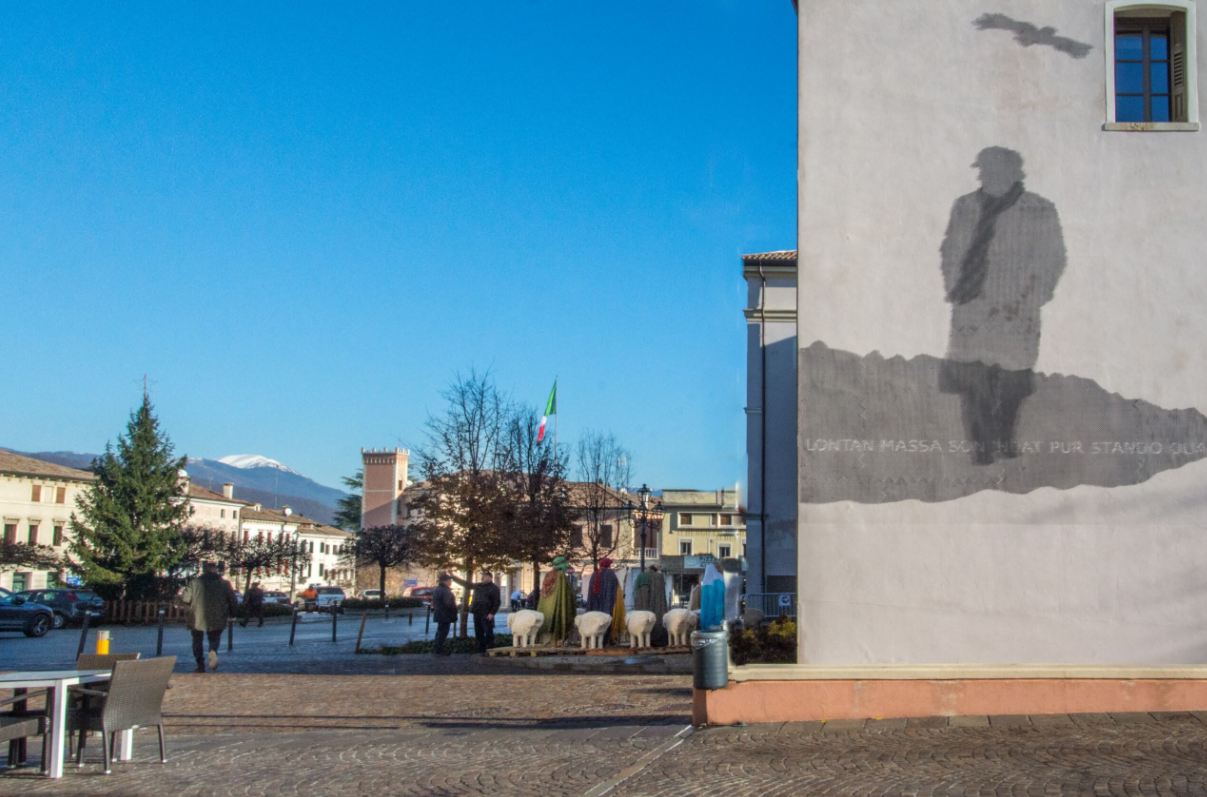
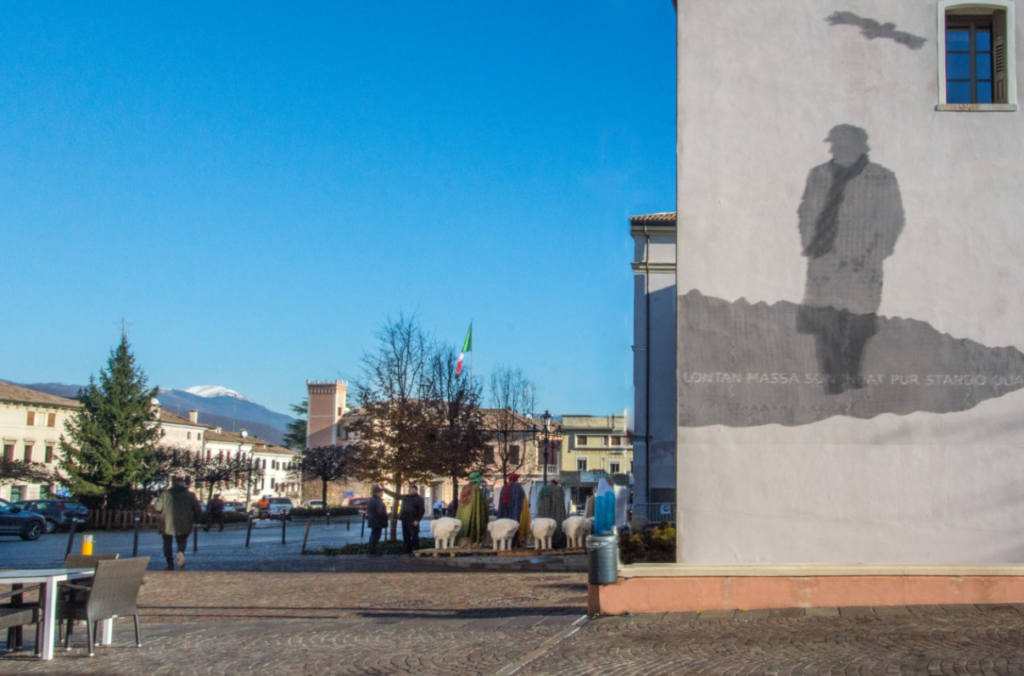
Continuing toward Piazza Vittorio Emanuele II, our attention is captured by Ombra in rete (“Shadow in the Net”) by Mario Martinelli, an installation on the west façade of the building. It is not a statue but a “plastic graffito” made of metal mesh depicting Zanzotto walking with scarf and hat. The work plays on the “presence of absence,” accompanied by the emblematic verse: “lontan massa son ‘ndat pur stando qua” (“I went very far, even while staying here”).
Water and Memory: the Soligo River and Borgo Stolfi
Crossing the square and heading toward the bridge, we reach Palazzo Balbi Valier, an ancient Venetian residence once linked to silk production and later home to sculptor Marta Sammartini. Just beyond lies a true “place of the heart”: Borgo Stolfi.
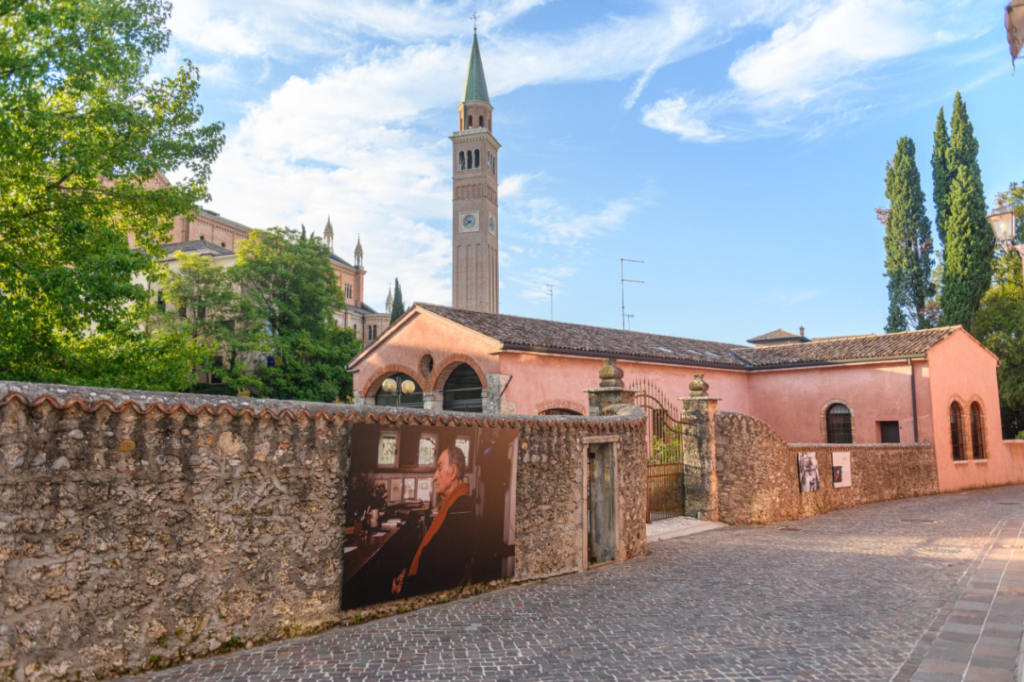
Here, along the Soligo River, time seems to stand still among old canals and mill wheels. The water appears to speak: markers on the walls recall the river’s floods, while the constant murmur of the current brings to mind the onomatopoeic atmospheres of Zanzotto’s poetry, who loved the Soligo for its reflections and vitality.
Following the river’s course, we can take La Via dei Troi, a nature trail connecting the center of Pieve with nearby Solighetto. The Soligo Park and the river’s gentle bends accompany us along this peaceful itinerary that unites culture and nature, immersed in the UNESCO-listed landscape.
“Zauberkraft”: Cal Santa and Casa Zanzotto
To continue exploring the historic center of Pieve di Soligo, after visiting the Soligo Park we cross Donatore Park and reach Cal Santa, where our itinerary reaches its emotional peak. Cal Santa is one of the town’s historic and most characteristic streets: an ancient Via Crucis adorned with small chapels and the Porta Santa. This area of the town was defined by the poet as his Zauberkraft, his “magical quarter.”
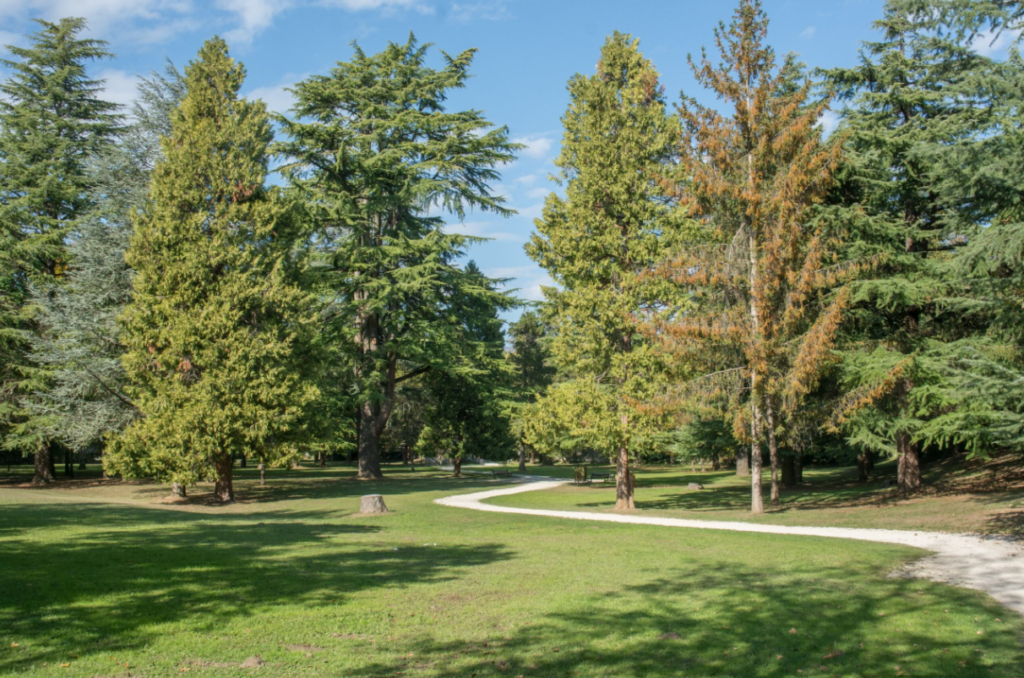
Here stands the childhood home of Andrea Zanzotto, where he spent his youth. Recently restored, the house is open on special occasions and invites visitors to physically enter Zanzotto’s world, among the frescoes painted by his father Giovanni and the windows opening onto that “small world” that became universal literature.
Faith, Art and History: the Cathedral and Corte Morona
From Cal Santa, just a few steps away, we reach the Cathedral, with its 75-meter-high bell tower. Inside, among works by Francesco da Milano and Marta Sammartini, rests Blessed Giuseppe Toniolo.
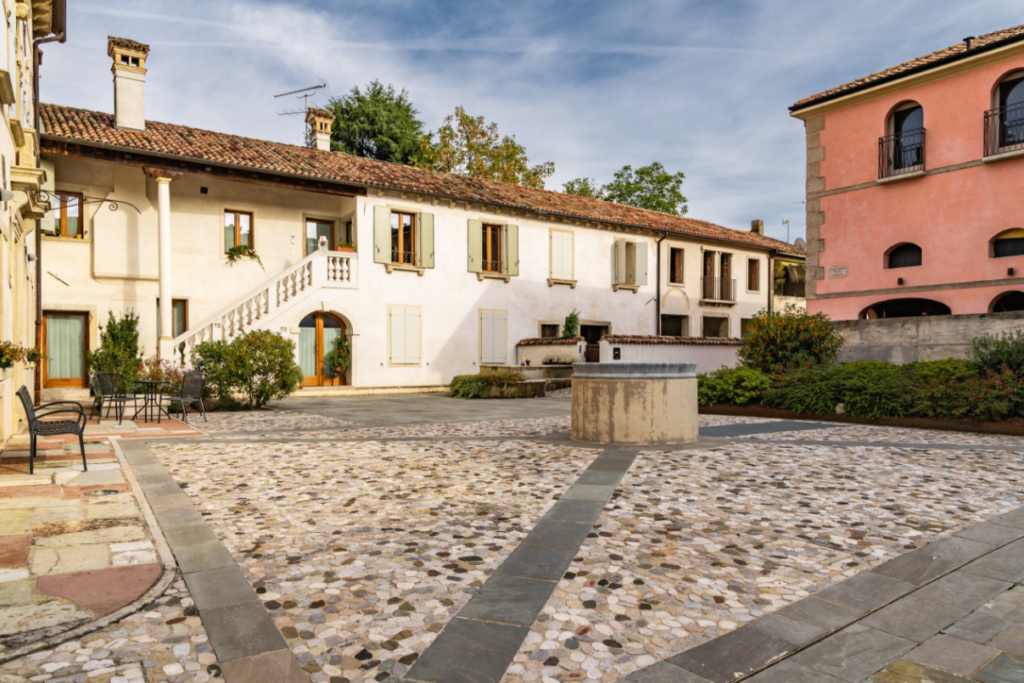
Directly opposite the Cathedral, Corte Morona welcomes us with the verses that Zanzotto affectionately dedicated to this space, now residential and administrative. Within this complex stands the small Baroque church of the Madonna del Carmine, which houses an altarpiece painted by Giovanni Zanzotto, the poet’s father.
Visiting Pieve di Soligo means immersing oneself in the Landscape itself, where the UNESCO-listed hills narrate the verses of discovery—just as in the poems that, here among these streets and waters, found their home.