Who has never been the victim of an April Fools’ Day prank at least once in their life? Not having been pranked on that fateful day is almost a disgrace, a bit like others not remembering us. Partly out of curiosity and partly for fun, I began to search for the origins of this “strange” tradition that has developed throughout the world and that has had as protagonists excellent characters both in the role of victims and “executioners”.
Just think that on April 1, 1938, just to name one, the famous American director Orson Welles during a radio program broadcast “The War of the Worlds”, a real radio commentary (invented from nothing) of the landing of the Martians on Earth. People fell for it completely, so much so that panic ensued and the police switchboards were inundated with calls. There were even those who claimed to have actually seen the Martians that day.
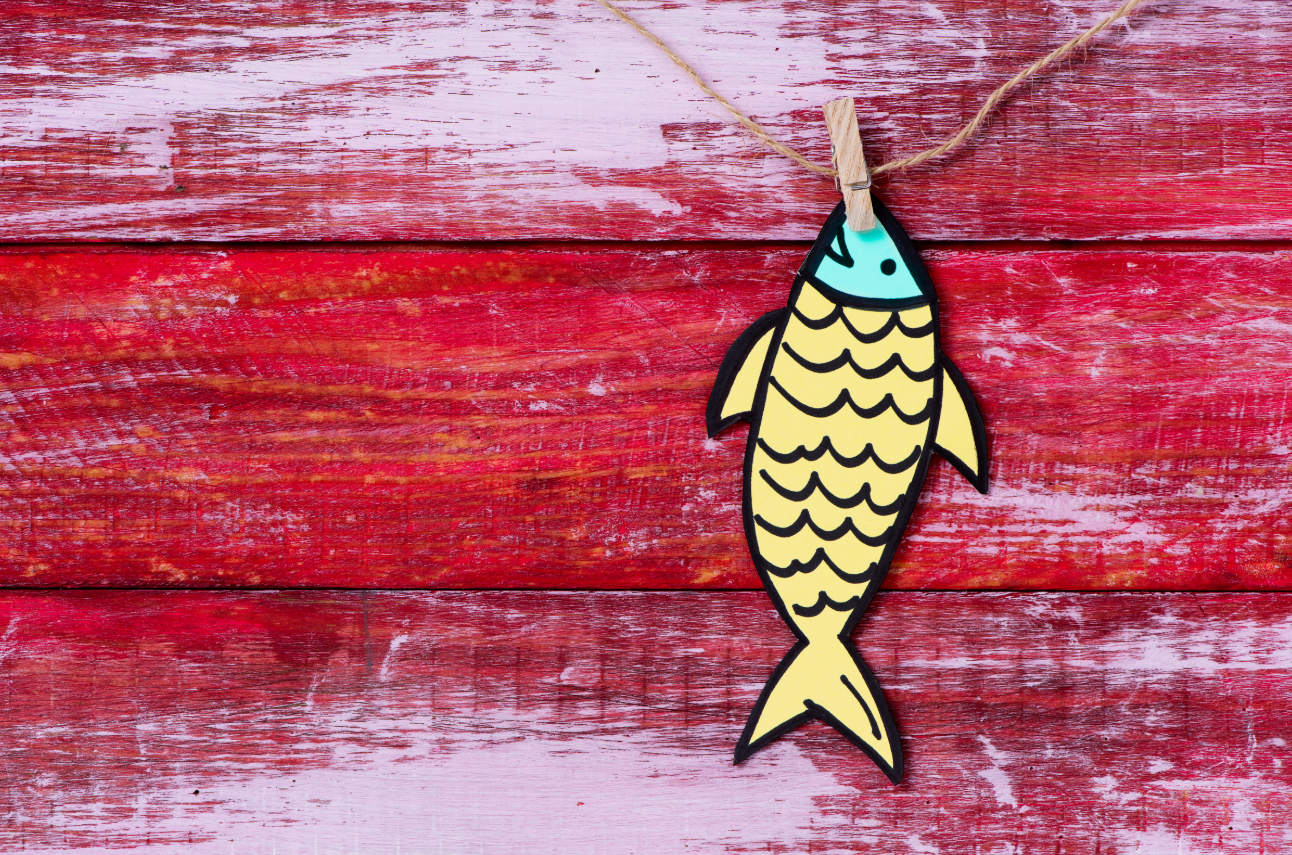
According to tradition, the first April Fools’ Day prank in history was planned by none other than Cleopatra. But why did the eclectic queen choose a fish for her prank? It is said that Mark Anthony, her lover at the time, during a fishing competition, to make a good impression, had a slave secretly attach his catch to the hook. Cleopatra discovered the deception and in turn had a giant fake fish covered in crocodile skin attached to the hook.

Another legend takes us back to the blessed Bertrando di San Genesio, patriarch of Aquileia from 1334 to 1350, who miraculously saved a pope who was choking on a fishbone. The pontiff, out of gratitude, decreed that in Aquileia, on April 1st, they would no longer eat fish.
According to other historians, the tradition was born in 16th-century France at the time of Charles IX. Before the adoption of the Gregorian Calendar in 1582, throughout Europe it was customary to celebrate New Year’s Eve between March 25th and April 1st, with the exchange of gift packages. Pope Gregory XIII’s reform moved the holiday to January 1st. Legend from beyond the Alps has it that many French people opposed to this change, continued to exchange empty gift packages on April 1st, jokingly wanting to refer to the now abolished holiday. The name given to the strange custom was “poisson d’Avril”, which translated brings us back to “April Fool’s Day”.
In Italy, the first April Fool’s Day brings us back to the maritime Genoa of the late 1800s. From the Ligurian city, the custom quickly spread to the rest of Italy. Now I leave you to remember the April Fools’ joke to which you are most emotionally attached, as creators or victims, with the certainty that if, as Dostoevsky claimed “Beauty will save the world”, healthy irony can certainly make it a better place.
Article by Giancarlo De Luca