The feast of San Martino is a special occasion that evokes many memories: from the study of the poem dedicated to him, to the traditions of our childhood, such as eating chestnuts or receiving the cake with the man on horseback. There is also the typical November fog and the stories of grandparents about the Saint. San Martino is a figure linked to peasant culture, a period in which agricultural contracts were renewed and barrels were opened for the first taste of new wine, a tradition that continues today.
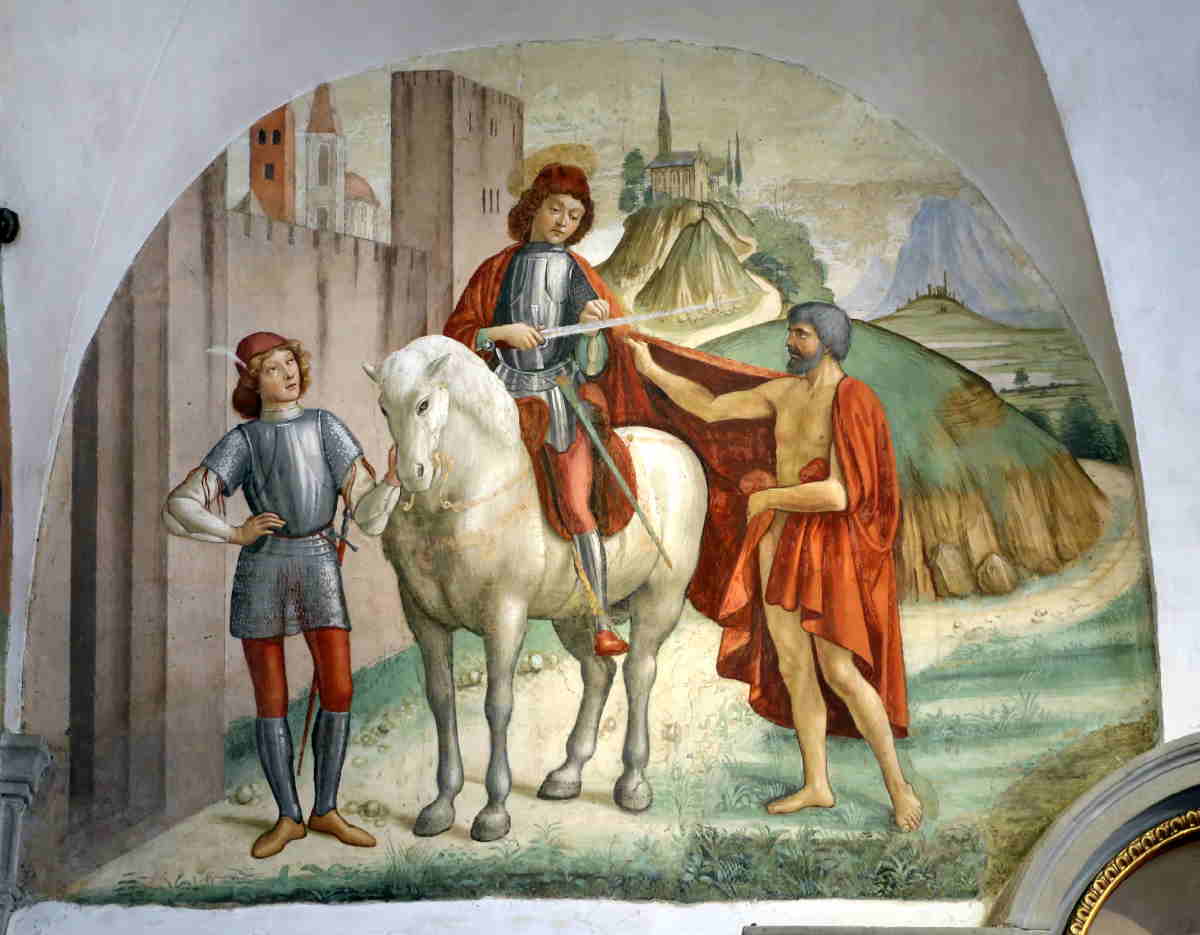
In Veneto, the bond with San Martino is deep and visible in many aspects of daily life: from popular mottos to typical dishes prepared in November. San Martino is known for his gesture of generosity towards a beggar: he cut his cloak and gave half of it to the poor man to protect him from the cold. The explanation for the “half cloak” lies in the fact that soldiers of the time had to pay for half of their equipment, while the other half was provided by the state.
Martin was born in 316 in Pannonia (now Hungary) and, during a patrol, he performed this gesture which, according to tradition, brought an end to the rain and the return of the sun, which gave rise to the meteorological phenomenon known as the Summer of Saint Martin, a period of sunshine and mild temperatures in November.
The feast of Saint Martin is celebrated on November 11, the day of his funeral in Tours, and has since become an important celebration throughout Western Europe. In some regions, such as Flanders, Germany and Alto Adige, children take part in processions with lanterns, while in Veneto it is traditional to prepare the “dolce di San Martino”, a shortcrust pastry in the shape of the saint on horseback, decorated with icing and confetti.

November 11 is also the day in which the end of the grape harvest is celebrated and the new wine is drunk. It is said that on Saint Martin “the must becomes wine” and this moment is celebrated with toasts and typical dishes such as chestnuts.
In folklore, San Martino is also the patron saint of innkeepers, as legend has it that he transformed water into wine. Furthermore, the story goes that Martino hid in a stable full of geese to avoid being elected bishop, but the noise of the animals revealed his position.
Until recently, November 11 also marked the end of the agricultural year, with the renewal of work and rental contracts. It was common to see people doing “San Martino”, or moving, on the 11th, when the houses had to be vacated.
In Veneto, San Martino is celebrated in over 114 churches and parishes dedicated to the Saint, with thousands of artistic works inspired by him. The tradition is rooted in the various provinces, among proverbs, songs and festivals that honor the figure of the saint. The festival, in an agricultural context, was also an occasion for great feasts, with dishes based on goose, traditionally consumed on this day. The Venetian proverb “Chi no magna oca a San Martin, no’l fa el becco de un quatrin” highlights the importance of this animal, considered a symbol of the festival. Another saying goes “Oca, castagne e vino, grazie tutto per San Martino”, confirming that the festivity was almost a “peasant New Year”.
© Marcadoc editorial team | 11/11/2024