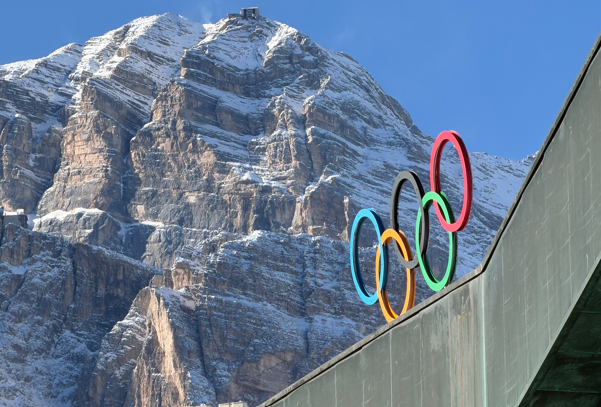
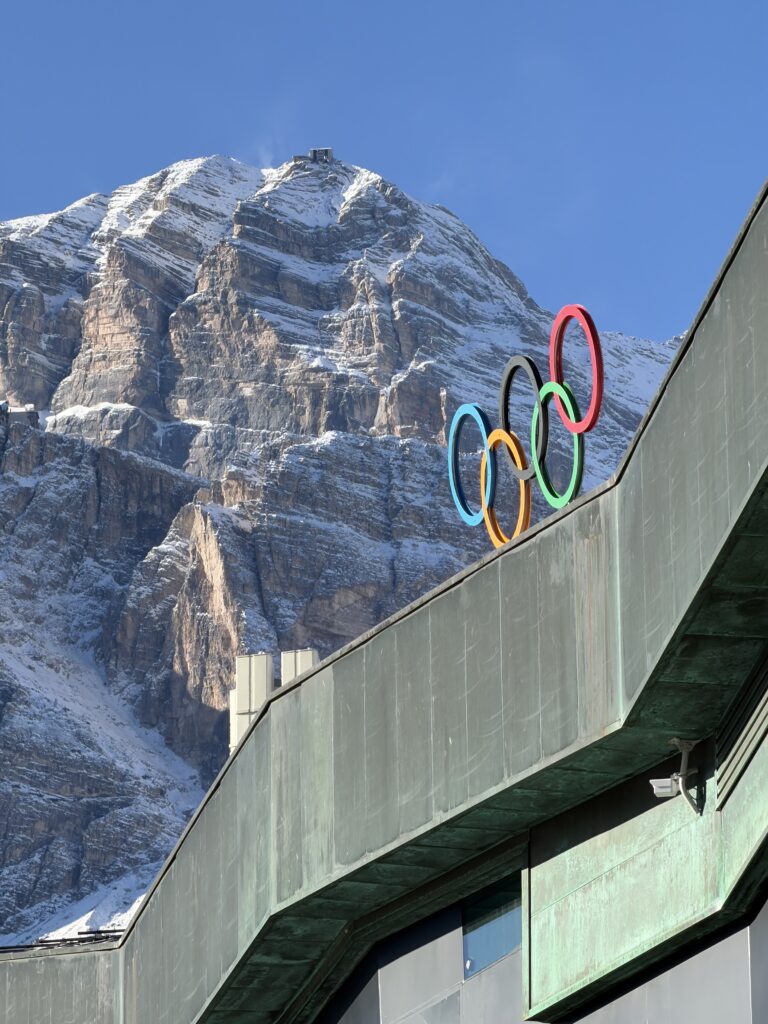
Cortina: Queen of the Dolomites, a World Heritage Site, home to the Ampezzo Dolomites Natural Park, and host city of the Winter Games twice, in 1956 and 2026, seventy years apart.
A string of titles is enough to give a sense of the wonder of an Alpine destination par excellence, recognized worldwide for its beauty and uniqueness. But there’s more.
The 1956 Games marked the occasion for numerous firsts and opportunities: they were the first to be broadcast on television and the first in which the Olympic Oath was pronounced by a female athlete, Giuliana Minuzzo. The impetus they provided transformed not only Cortina’s tourism profile, but also its sporting profile, leading to the founding of Italy’s first curling club in 1956, among the peaks of the Queen of the Dolomites.
Seventy years later, Stefania Costantini and Amos Mosaner won a stunning bronze medal on the ice at the Cortina Stadium, their first Olympic medal since winning gold in Beijing in 2022.
Today, like four years ago, the passion for curling has exploded, infecting everyone and invading social media with more or less successful comments and, above all, imitations and parodies that contribute to spreading sympathy for this actually very complex sport.
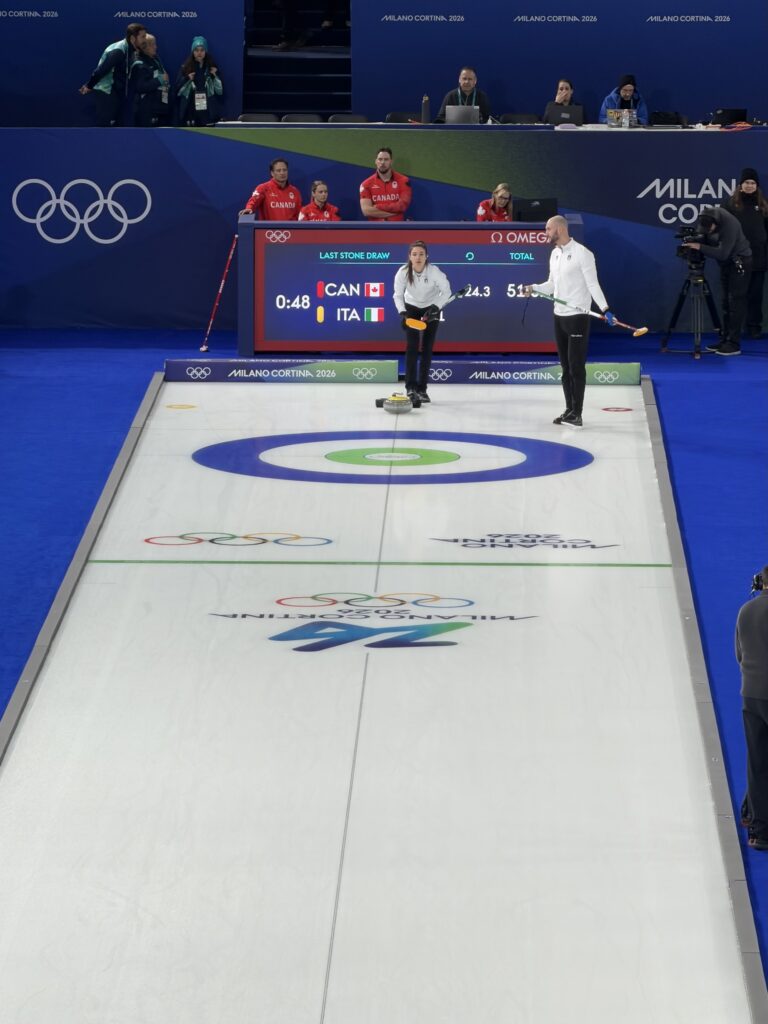
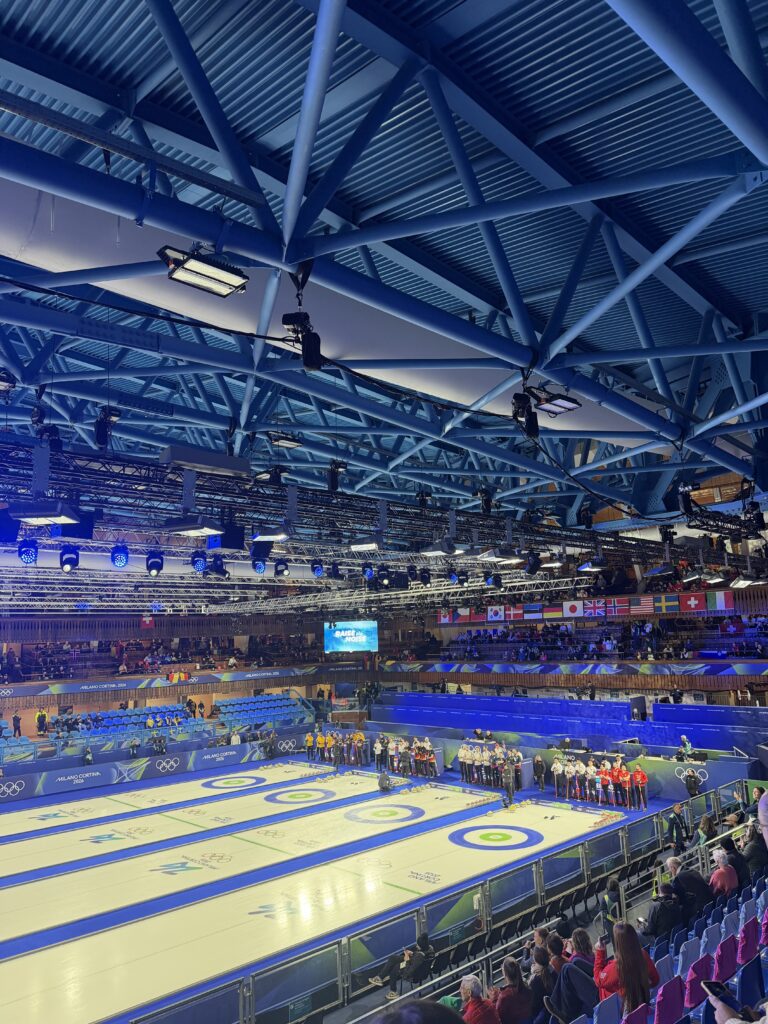
To play curling, in fact, you need to master the technique, maintain calm and composure, think and act strategically, and be athletically prepared.
Yes, indeed: sliding across the ice on your knees with your weight on one leg, consciously throwing an 18-20 kg stone without losing your balance, is not as easy as it may seem.
Nor is using brooms while the stone slides and you try to adjust its direction, avoiding already-placed stones and, above all, listening to the others’ directions.
Because curling is a team game, and even knowing your teammates’ strengths is crucial to the team’s success.
Victory or defeat, in fact, as often happens at the highest levels, is a matter of sometimes minimal variables.
Even the playing field itself is a challenge.
The ice can be “slow” or “fast” at different times of the day, even if it remains in the same place. It is therefore necessary to know how to correctly interpret the field, adjusting the individual release and the entire strategy.
The reason why the ice can be “fast” or “slow” requires entering the world of curling court preparation.
A small, yet large, universe of experts, passionate about curling, often deeply involved in their work.
Many in the audience were intrigued by watching the ice makers at work: some spectators filmed them and posted the images on social media, sparking a wave of sympathy for the technicians.
This phenomenon, in turn, fuels the allure of curling, which can captivate anyone, regardless of their level of knowledge of the sport.
And all of this is truly magical: the magic of sport, the magic of Cortina.
Article by Chiara Costa | 21/02/2026